Who were the designers involved in the 'Emeralds for Elephants' collection?
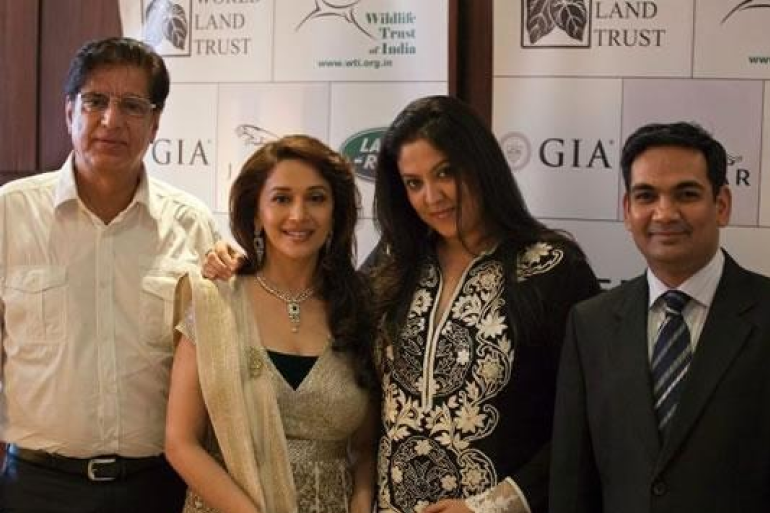
Back in 2011, the World Land Trust, in collaboration with ethical colored gemstone mining company Gemfields, joined forces with Jaguar Land Rover and the Gemological Institute of America (GIA India) to create a unique ‘pop-up’ collection of bespoke Zambian emerald jewelry. This initiative followed the success of Emeralds for Elephants in London in 2010 and aimed to raise awareness and crucial funds for the Wildlife Trust of India’s (WTI) conservation efforts for Asian elephants.
Ten of India’s leading jewelry designers were brought together to craft this exclusive collection, drawing inspiration from elephants and the biodiverse corridors they inhabit. The participating jewelers included Abaran Jewellers (Bangalore), Anmol Jewellers (Mumbai), Gem Palace (Jaipur), Khanna Jewellers (New Delhi), Meena Jewellers (Hyderabad), Narayan Jewellers (Baroda), Nirav Modi (Mumbai), Sawansukha Jewellers (Kolkata), Talwarsons Jewellers (Chandigarh), and Vummidi Bangaru Jewellers (Chennai).

Source: WeddingSutra
From August to October 2011, the collection was showcased across the boutiques of these jewelers, culminating in an auction by Sotheby’s on October 14 at the Taj Mahal Hotel in Mumbai. A portion of the proceeds supported the World Land Trust’s Indian Elephant Corridor project, which aimed to protect vital habitats for these magnificent creatures.
Suggested Article: Romantic Proposal Spots Paris

Source: WeddingSutra
One of the standout pieces of the collection was a breathtaking Ganesha sculpture featuring a 638-carat Zambian emerald from Gemfields, designed by renowned artist Arzan Khambatta.

Source: WeddingSutra

Source: WeddingSutra

Source: WeddingSutra

Source: WeddingSutra

Source: WeddingSutra
Suggested Article: A Glamorous Sangeet Under the Stars: Nitasha & Rahul’s Magical Celebration

Source: WeddingSutra

Source: WeddingSutra

Source: WeddingSutra

Source: WeddingSutra
This initiative brought together artistry, luxury, and conservation, demonstrating how the jewelry industry could contribute to meaningful environmental causes.
Suggested Article: Unique Indian Wedding Decor Ideas | Wedifys
Frequently Asked Questions
1. What is the 'Emeralds for Elephants' initiative?
The 'Emeralds for Elephants' initiative was a collaboration launched in 2011 by the World Land Trust, Gemfields, Jaguar Land Rover, and the Gemological Institute of America (GIA India). The aim was to raise awareness and funds for the conservation of Asian elephants in India through a bespoke collection of Zambian emerald jewelry created by ten of India’s top jewelry designers. The profits from the collection supported the Wildlife Trust of India's 'Indian Elephant Corridor' project.
2. Who were the designers involved in the 'Emeralds for Elephants' collection?
The collection featured the work of ten prestigious Indian jewelry designers: Abaran Jewellers (Bangalore), Anmol Jewellers (Mumbai), Gem Palace (Jaipur), Khanna Jewellers (New Delhi), Meena Jewellers (Hyderabad), Narayan Jewellers (Baroda), Nirav Modi (Mumbai), Sawansukha Jewellers (Kolkata), Talwarsons Jewellers (Chandigarh), and Vummidi Bangaru Jewellers (Chennai). These designers crafted unique, bespoke pieces inspired by elephants and their habitats.
3. How were the proceeds from the 'Emeralds for Elephants' auction used?
A percentage of the profits from the sale of the jewelry collection went towards supporting the World Land Trust’s 'Indian Elephant Corridor' project. This initiative focused on preserving vital habitats for the Asian elephant, ensuring safe migration routes and protecting the biodiversity of the elephant corridors in India.
4. What was the significance of the 638-carat emerald in the collection?
One of the most remarkable pieces in the collection was a Ganesha sculpture, which featured a 638-carat Zambian emerald sourced from Gemfields. Designed by renowned artist Arzan Khambatta, the sculpture was a striking representation of both the cultural and environmental themes of the initiative, combining luxury with a cause aimed at preserving wildlife.