A BRIDE WHO TURNED MEMORIES INTO DESIGN
Six years ago, designer Kresha Bajaj created a buzz among fashionistas and design aficionados with her stunning wedding lehenga, which featured intricate embroidery depicting key moments from her relationship. This inspired Namrata, who knew she wanted to incorporate a similar personal touch into her own bridal ensemble. Once her wedding plans were set, Namrata got to work, dedicating countless hours to sketching her love story onto her blouse. With the invaluable help of her friend, she brought her vision to life. Namrata expresses her gratitude, “I owe a huge thanks to Disha, owner of Soiree Couture, for supporting my creative journey, and to Kresha Bajaj for sparking this idea.”

Source: WeddingSutra
THE TIME CAPSULE BLOUSE – A STORY IN THREADS

Source: WeddingSutra

Source: WeddingSutra

Source: WeddingSutra
Suggested Article: 5 Brides Who Made Their Wedding Looks Truly Personalized
DESIGN PROCESS & CRAFTSMANSHIP
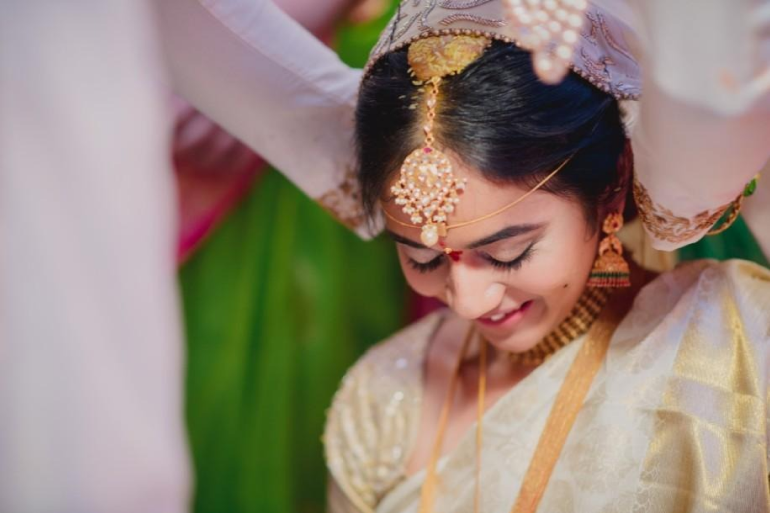
On her wedding day, Namrata turned heads in a white and gold Kanjivaram saree, with her custom-designed blouse taking center stage. The blouse was a labor of love, embodying a cherished keepsake. “The blouse was both a source of excitement and nerves throughout the planning process. I had an amazing time drawing, writing, tracing, designing, and having fun with some of my favorite people!” Namrata explains. She elaborates on the blouse’s design: “We started with the fabric from the blouse that came with the saree but added a modern twist with 1-inch Salli fringes on the sleeves. The front featured a snapshot from December 31, 2013, while the back displayed the proposal date, exactly four years later. The sleeves showcased silhouettes from our favorite photos, and the bottom of the blouse included a line written by my husband. The left and right sides were adorned with memories from our first date and first drive on Lombard Street!”

Source: WeddingSutra

Source: WeddingSutra

Source: WeddingSutra
Suggested Article: 6 Captivating Moments of Deepika Padukone Adorning Sabyasachi Creations
BRIDE’S TIPS FOR CUSTOM EMBROIDERED BLOUSES
For brides inspired by her story, Namrata offers some tips for achieving similar results.
1. Avoid using small cursive fonts for embroidery, as they are challenging to execute.
2. Limit drawing inspiration from photographs, as the depth and detail of pictures can be hard to replicate with sequins.
3. Choose a fabric that can withstand extensive pinning and needlework. Make rough sketches of the front, back, and sleeves only after taking your measurements to ensure your design is to scale.
4. Request photos or videos from your designer during the needlework process so you can make adjustments before your blouse is finalized.
5. Opt for zari thread for all your outlines.
Namrata's efforts were met with an enthusiastic response, and the photos of her stunning blouse clearly illustrate why. For more details on groom Kiran and bride Namrata’s Hyderabad wedding, beautifully captured by our Wedifys Favorites Photographer – Journeys by Ram, check out our coverage.
Suggested Article: 8 Stunning Outfit Ideas for Pre-Wedding Photos
Frequently Asked Questions
1. Why should I avoid using small cursive fonts in embroidery?
Small cursive fonts can be challenging to embroider due to their delicate and intricate nature. They can often become distorted or unclear when stitched, making them less suitable for detailed embroidery projects.
2. How can I ensure that my embroidered design is accurately scaled?
To ensure your design is accurately scaled, make rough sketches of the front, back, and sleeves only after taking precise measurements. This will help you create a design that fits correctly and looks proportionate on your blouse.
3. What fabric is best for intensive embroidery work?
Choose a fabric that can handle extensive pinning and needlework, such as sturdy silk or satin. Fabrics that are too delicate or thin may not withstand the rigorous embroidery process.
4. Why is it important to request photos or videos of the embroidery process?
Requesting photos or videos during the embroidery process allows you to review and make necessary adjustments before the final stitching is completed. This ensures that any issues can be addressed promptly, resulting in a finished product that meets your expectations.